
14 April 2023 Issue 2523 © ULLAPOOL NEWS
Ullapool Sea Savers
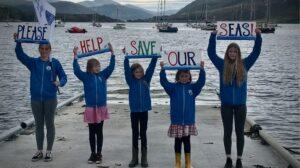
Poll shows levels of concern about ocean health highest in coastal communities
National and regional surveys indicate that concern about the health of Scotland’s seas is highest in coastal communities, with a large majority expressing concern about the environmental impacts of fishing. The Our Seas coalition, which is calling for the reinstatement of a limit on bottom-trawling and dredging to recover marine life, and safeguard sustainable inshore fishing, commissioned the poll to assess public attitudes on fisheries management.
The poll, conducted by Survation between December 2022 and January 2023, found that nationally 69% of respondents are concerned about the impacts of fishing on the marine environment; with an even higher proportion (73%) expressing this view in a selection of coastal towns and villages, including Campbeltown, Lochinver, Fraserburgh and Wick.
The coalition published the survey results to help inform public debate during the Scottish Government’s consultation for Highly protected Marine Areas (HPMAs) within 10% of Scotland’s inshore and offshore seas. According to government plans, these sites would offer the strictest level of protection by only allowing non-damaging recreational activities.
The coalition argues that the main reason that these measures are being proposed is because successive governments have failed to take adequate action to protect and recover Scotland’s inshore zone, including in existing marine protected areas. The spawning stock level of west coast cod and herring are at near record lows according to ICES assessments and scientists advise zero-catch for these once abundant fisheries. 58% of the Scottish seabed is classed as ‘highly disturbed’, meaning that every single one of our inshore marine regions have failed to achieve the government’s commitment for ‘Good Environmental Status’. According to the 2019 UK Marine Strategy, bottom-towed fisheries are the main driver for seabed damage, yet bottom trawling and dredging are permitted in 95% of Scotland’s sea.
The coalition, made up of over 130 coastal businesses, community groups, fishermen’s organisations and environmental NGOs, has often highlighted the need for fisheries management to include a range of voices rather than just a few vested interests.
*****
Ullapool Sea Savers
Poll shows levels of concern about ocean health highest in coastal communities
National and regional surveys indicate that concern about the health of Scotland’s seas is highest in coastal communities, with a large majority expressing concern about the environmental impacts of fishing. The Our Seas coalition, which is calling for the reinstatement of a limit on bottom-trawling and dredging to recover marine life, and safeguard sustainable inshore fishing, commissioned the poll to assess public attitudes on fisheries management.
The poll, conducted by Survation between December 2022 and January 2023, found that nationally 69% of respondents are concerned about the impacts of fishing on the marine environment; with an even higher proportion (73%) expressing this view in a selection of coastal towns and villages, including Campbeltown, Lochinver, Fraserburgh and Wick.
The coalition published the survey results to help inform public debate during the Scottish Government’s consultation for Highly protected Marine Areas (HPMAs) within 10% of Scotland’s inshore and offshore seas. According to government plans, these sites would offer the strictest level of protection by only allowing non-damaging recreational activities.
The coalition argues that the main reason that these measures are being proposed is because successive governments have failed to take adequate action to protect and recover Scotland’s inshore zone, including in existing marine protected areas. The spawning stock level of west coast cod and herring are at near record lows according to ICES assessments and scientists advise zero-catch for these once abundant fisheries. 58% of the Scottish seabed is classed as ‘highly disturbed’, meaning that every single one of our inshore marine regions have failed to achieve the government’s commitment for ‘Good Environmental Status’. According to the 2019 UK Marine Strategy, bottom-towed fisheries are the main driver for seabed damage, yet bottom trawling and dredging are permitted in 95% of Scotland’s sea.
The coalition, made up of over 130 coastal businesses, community groups, fishermen’s organisations and environmental NGOs, has often highlighted the need for fisheries management to include a range of voices rather than just a few vested interests.
*****